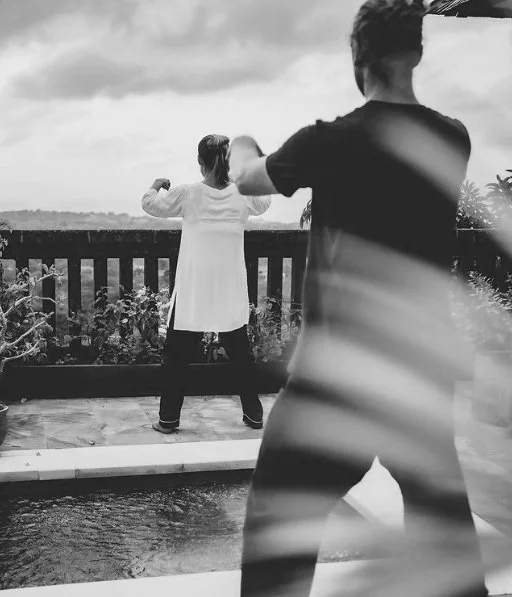
Creative Movement

Play Your Way to Better Tai Chi

Play Your Way to Better Tai Chi: How the Chinese Verb "Wan" Unlocks the Spirit of the Martial Arts

Tai chi is often associated with strict discipline, precise angles, and serious faces. However, the deepest traditional secret to mastering this ancient art lies in a completely different attitude: playfulness. In Mandarin Chinese, advanced practitioners often do not say they "practice" tai chi. Instead, they use the word wan (玩)—which literally means "to play." Shifting your mindset from rigid work to creative play can completely transform your practice, making it both more enjoyable and far more effective.

The True Meaning of Wan

In Western culture, play is often dismissed as something trivial or reserved only for children. In the context of Chinese internal martial arts, wan carries a profound, sophisticated meaning. It describes an attitude of lighthearted exploration, deep curiosity, and curiosity without anxiety over the final result.

When you wan tai chi, you treat the movements like a fascinating puzzle or a favorite toy. You turn it over in your hands, look at it from different angles, and experiment with it just to see what happens. This perfectly captures the true energy of tai chi because the art is fundamentally based on the concept of Yin and Yang—the continuous, fluid balancing of opposites. Play requires this exact same agility, adaptability, and spontaneous joy.

Why Hard Work Blocks Soft Power

Tai chi is famous for its "soft power," or jin. This unique strength does not come from tensing your muscles; it comes from deep physical relaxation and mental presence.

When you approach tai chi with a stressful "workout" mindset, your body naturally tightens up. You worry about getting the steps wrong, your shoulders shrug upward, and your breathing becomes shallow. This tension blocks the flow of internal energy (qi) and locks your joints.

By adopting a play-based mindset, you instantly trick your nervous system into letting go of stress. Play signals safety to your brain. When you feel safe, your muscles relax, your center of gravity drops, and you can finally experience the deep, fluid connectivity that tai chi promises.

Three Ways to Bring Play into Your Practice

Transforming your daily routine into a play-based practice does not require changing your form. It requires changing your intent.

  • Play with Structure: Instead of stressing over a perfectly straight back, pretend your spine is like a string of pearls suspended from Heaven, gently swaying in a breeze. Experiment with being slightly too heavy, then slightly too light, until you find the perfect, joyful middle ground.

  • Play with Visualizations: Tai chi movements have poetic names like "White Crane Spreads Its Wings" or "Repulse Monkey." Lean heavily into these images. Do not just move your arms; actually imagine the air resistance against your feathers, or feel the heavy, fluid density of moving through water.

  • Play with Partner Work (Tui Shou): Push hands practice is often ruined by competitiveness. If you approach it as a game to "win," you will stiffen up and resort to brute force. If you treat it as a physical conversation—a game of tag where the goal is to listen with your skin—you will naturally absorb and redirect your partner's force with ease.

The Ultimate Reward: Sustainable Joy

The biggest benefit of a play-based practice is simple longevity. When practice feels like a chore, you will eventually find excuses to skip it. When practice becomes your designated time to play, explore, and feel vibrant in your body, you will look forward to it every day. By learning to wan tai chi, you stop fighting yourself and finally start flowing.

Qi Gong Creative

Qi Gong, an ancient Chinese practice combining gentle movements, deep breathing, and meditation, can be a powerful tool for creatives seeking to enhance their work.

By cultivating a calm and focused mind, Qi Gong helps to quiet the internal chatter that often blocks the flow of inspiration. It allows creatives to tap into a deeper well of intuition and access a more relaxed and receptive state, enabling them to connect with their inner muse more readily.

Qi Gong also improves physical and mental well-being, reducing stress and anxiety that can hinder creativity. By improving circulation and energy flow, it enhances overall vitality and reduces fatigue, allowing creatives to sustain focused work for longer periods. The gentle movements and mindful breathing techniques also help to release tension and improve posture, reducing physical discomfort that can impede creative expression.

Ultimately, Qi Gong fosters a sense of inner peace and balance, crucial for accessing the creative spirit. By cultivating a more harmonious internal state, creatives can approach their work with greater clarity, focus, and emotional depth. This can lead to more original, insightful, and impactful creations, as the artist is able to express themselves with greater authenticity and freedom.

How to Build Skills Through Play

Play is often the most enjoyable and effective way to develop physical skills because it engages both the body and mind in a dynamic and interactive way.

During play, whether it's hopping, skipping, jumping, or kicking a ball, people naturally experiment with their movements, refining their coordination, balance, and agility through fun activities. This playful exploration allows for a deeper understanding of their physical capabilities, encouraging them to push boundaries and try new things without the fear of failure. The spontaneous nature of play fosters creativity, providing an environment where learning is embedded in joyful experiences rather than structured drills.

Moreover, play enhances social interaction, which further develops physical skills. When people engage in team sports or group games, they learn the importance of teamwork, communication, and strategy, all of which require specific physical competencies. Whether it’s passing a ball, evading a defender, or collaborating on a group obstacle course, these activities demand not only individual skill development but also an awareness of how their movements affect others.

The combination of physical exertion and social dynamics creates a robust learning atmosphere where skills are honed organically, making play a powerful tool for nurturing growth and development in a person’s physical journey.

Let Play Be the Guide

Approaching your movement practice with a child-like spirit fosters a sense of playfulness and curiosity, encouraging exploration and experimentation. Children naturally move with joy and abandon, free from the constraints of self-judgment and the pressure to perform. By embracing this spirit, you can rediscover the intrinsic joy of movement, allowing your body to guide you rather than adhering to rigid rules or striving for perfection. This playful approach cultivates a deeper connection to your body and mind, fostering a sense of ease and flow within your practice.

In contrast, a strict dogmatic approach often leads to rigidity, frustration, and even injury. When you focus solely on achieving specific goals or adhering to a particular style, you may neglect the nuances of your own body's needs and limitations. This can lead to overtraining, burnout, and a loss of enjoyment in your practice. A child-like spirit, on the other hand, encourages you to listen to your body, honor its limitations, and adapt your practice accordingly. This allows for a more sustainable and fulfilling movement journey, where progress is measured not by external achievements but by the internal sense of joy and well-being it brings.

A Playful Approach for Active Older Adults

A playful approach to movement ignites joy and spontaneity, making exercise feel less like a chore and more like a delightful game for active older adults. Engaging in activities that incorporate laughter, social interaction, and creativity helps to reduce resistance to movement. When the focus shifts from rigorous workouts to fun, light-hearted experiences, older adults are more likely to feel motivated to participate regularly, fostering a positive attitude towards their fitness journey.

Active older adults thrive in environments where they can connect with others and express themselves freely. By integrating playfulness into exercise programs—such as dance, group games, or obstacle courses designed with a twist—participants build camaraderie and share smiles. This social component not only enhances their physical engagement but also strengthens emotional bonds, creating a supportive community that encourages everyone to keep moving and celebrating their capabilities.

Moreover, playfulness can enhance cognitive function and creativity, which are vital for maintaining overall well-being in older adults. When movement is woven with elements of fun, it can stimulate mental engagement and memory retention, making each session an invigorating experience for both body and mind. By cultivating a playful atmosphere, exercise transforms into a delightful exploration of movement, empowering older adults to embrace their physical potential while enjoying every step along the way.

The Soft Skill of Coaching

Coaches can unlock their creative potential by embracing a play-based approach to teaching human movement. This playful methodology prioritizes exploration and discovery, allowing athletes to engage with their bodies in an organic and instinctual manner. By incorporating games and fun drills, coaches can spark joy in movement, fostering a more profound connection between athletes and their physical capabilities. This approach not only enhances skill development but also ignites creativity in how athletes move, think, and react in various scenarios, making the learning process not only effective but enjoyable.

Incorporating play into coaching encourages coaches to think outside conventional training norms, inviting innovation in coaching strategies. By utilizing imaginative themes, playful challenges, and scenarios that mimic real-life situations, coaches can create an environment where athletes feel safe to experiment and take risks. This experimentation leads to a deeper understanding of movement mechanics and strategy, equipping athletes with the versatility needed to navigate competitive environments. Ultimately, a play-based approach not only cultivates creativity among coaches but also nurtures resilient, adaptable athletes ready to thrive.

Play is Motor Learning

Play is the best way to learn new movement skills because it fosters a sense of curiosity and exploration. When individuals engage in playful activities, they naturally experiment with different movements without the fear of making mistakes. This exploration allows them to discover their body's capabilities in a fun and relaxed environment, which enhances creativity and spontaneity. By incorporating elements of play, learners can develop a deeper understanding of coordination, balance, and agility as they interact with their surroundings in a joyful manner.

Moreover, play often involves social interaction, which can amplify the learning experience. When individuals participate in playful activities with others, they not only learn new skills but also receive feedback and encouragement from their peers. This collaborative aspect creates a supportive atmosphere that motivates learners to push their boundaries and take risks. As they navigate games and challenges together, individuals build confidence and internalize movement patterns that may become second nature over time. In this vibrant tapestry of connection and fun, the learning process feels effortless, ensuring that new movement skills are not merely acquired but joyfully embraced.

How to Get Strong Through Play

A play-based approach to martial arts training can be a powerful tool for developing strength and overall physical fitness. By incorporating games and challenges into training sessions, martial artists can engage their bodies and minds in a way that promotes natural strength development. For example, obstacle courses designed to mimic real-world combat scenarios can help build explosive power, agility, and endurance. Additionally, partner drills that involve grappling or striking can improve strength and muscle tone through dynamic resistance.

Furthermore, play-based training fosters a sense of fun and excitement, making it easier for martial artists to stay motivated and consistent with their training. This increased engagement leads to greater effort and intensity, which ultimately translates to faster progress. By focusing on skill development and creative problem-solving within a playful context, martial artists can unlock their full potential and achieve significant physical and mental gains.

Play for the Aging Artist

Play is not just for children; it's a vital ingredient for creativity at any age. Engaging in playful activities stimulates the brain and encourages out-of-the-box thinking. Whether it’s through art, games, or even improvisational exercises, play allows older adults to experiment, take risks, and explore new ideas without the pressure of performance. This freedom helps to maintain a creative mindset, fostering innovation and original thought that can lead to personal growth and fulfillment.

Additionally, play ignites curiosity and invites exploration, qualities that often wane as we age. By participating in playful pursuits, individuals can reconnect with their sense of wonder, rekindling the joy of discovery. Whether it's trying a new hobby, joining a community theater group, or tackling brainteasers, these playful engagements can reinvigorate the mind, making it easier to approach challenges with a fresh perspective. Embracing play can transform mundane routines into exciting adventures that spark creativity.

Moreover, the social aspect of play is crucial for creativity in older years. Engaging with others in playful interactions fosters collaboration and the exchange of ideas, which can create a rich environment for creative thinking. Sharing experiences through games, improvisation, or storytelling can lead to unexpected connections and inspire innovation. This interaction not only nourishes creativity but also strengthens relationships, making the journey of aging a joyful, enriching experience full of possibility.

Building Stronger Artists

Physical strength and movement can significantly enhance one’s artistic and creative expression. When the body is strong and well-conditioned, it becomes a vessel for exploration and experimentation. Engaging in physical activities like dancing, sculpting, or painting requires a level of bodily awareness and control that a strong physique can provide.

The freedom to move fluidly, manipulate materials, or express oneself through motion opens the door to new ideas and innovative approaches to art.

This physical confidence translates into artistic confidence, allowing creators to take risks and venture into uncharted creative territories.

Moreover, the interplay between strength and creativity fosters a heightened sense of discipline and focus. Regular physical training instills a mindset of perseverance and resilience, which can resonate deeply within the creative process. Artists often face challenges and moments of self-doubt, but a strong body nurtures a strong mind, empowering individuals to push through obstacles. The rhythm and repetition inherent in physical training can also inspire artistic rhythms, leading to unique patterns and themes in one’s work. Thus, the union of physical strength and creativity cultivates a vibrant synergy, enhancing the artistic journey and inviting boundless possibilities.