
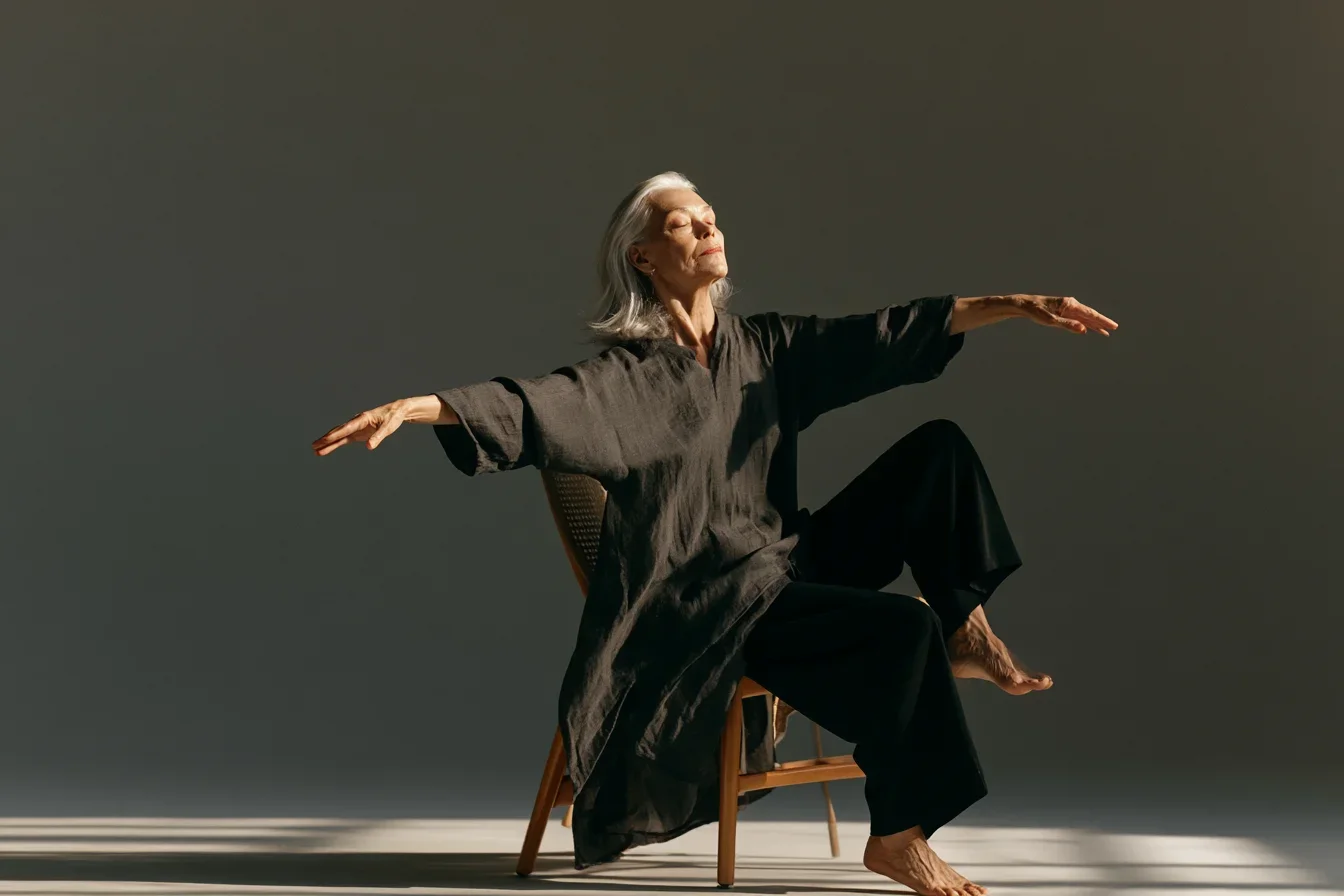
Seated or chair Tai Chi is a gentle, accessible way to experience the balance, breath, and relaxed power of traditional Tai Chi without standing. It strips practice down to essentials: mindful movement, rhythmic breath, and an anchored sense of presence. Whether you’re recovering from injury, managing limited mobility, or simply looking for a calmer way to move, chair Tai Chi helps you find flow while staying firmly rooted in your seat.
Why seated practice works:
Stability as foundation: A chair provides a stable base so you can explore weight, alignment, and intent without worrying about falls. That safety invites curiosity rather than tension.
Micro-movements, macro-effects: Tiny shifts in the hips, spine, shoulders, or wrists ripple through the nervous system. Even small, slow motions improve circulation, joint mobility, and proprioception.
Breath-led flow: When movement is coordinated with the breath, gestures become meditative. Slow inhalations and longer exhalations create a natural cadence that organizes motion and calms the mind.
Accessibility equals consistency: Easier access encourages regular practice. Five minutes daily in a chair trumps an hour once a month on a good day.
How to get started (simple sequence)
Settle: Sit mid-chair with feet flat, hips level, spine tall but relaxed. Hands rest lightly on thighs. Close your eyes briefly and notice breath for three full cycles.
Root the base: Feel weight through sit bones and heels. Slightly soften knees and draw the tailbone down—not rigid, just aware.
Rock and find center: Gently rock forward and back from the hip, a few breaths each way. Find a neutral center where rocking eases.
Spiral the torso: On an inhale, turn the chest slightly to the right; on the exhale, bring it back through center and to the left. Keep movements slow, guided by breath.
Wave the arms: As you inhale, raise both hands in front, palms up; as you exhale, lower them, palms down. Let the shoulders remain soft. Imagine drawing energy from your center out through the fingertips.
Rooted standing, seated energy: Finish by placing both hands on the knees, lengthening the spine on an inhale, and sinking the shoulders on an exhale. Sit for a breath or two and notice how grounded yet fluid you feel.
Keys to finding flow in your seat:
Breathe first: Breath sets the tempo. Follow it.
Move slowly: Speed breaks connection. Slow down until each shift is intentional.
Let alignment guide you: Small, consistent postural cues—hips over knees, head balanced over spine—amplify ease.
Use imagery: Picture your spine growing tall like bamboo, or your breath as a tide moving through the ribs. Imagination makes micro-movements feel expansive.
Be playful: Try exaggerating a tiny twist, then soften it. Play invites exploration without pressure.
Benefits you’ll notice
Improved posture and core engagement
Greater joint mobility and less stiffness
Calmer nervous system, reduced stress and anxiety
Enhanced coordination and body awareness
A convenient, sustainable way to practice Tai Chi anywhere
Seated Tai Chi isn’t a lesser version; it’s a distilled one. When you trade ground for a chair, you don’t lose flow—you refine it. Rooted in the seat, you discover that stability breeds freedom: micro-movement unlocks macro-relaxation, breath coordinates motion, and presence turns ordinary sitting into a moving meditation. Try a few minutes a day and notice how easy it is to find your flow while staying beautifully, playfully rooted.